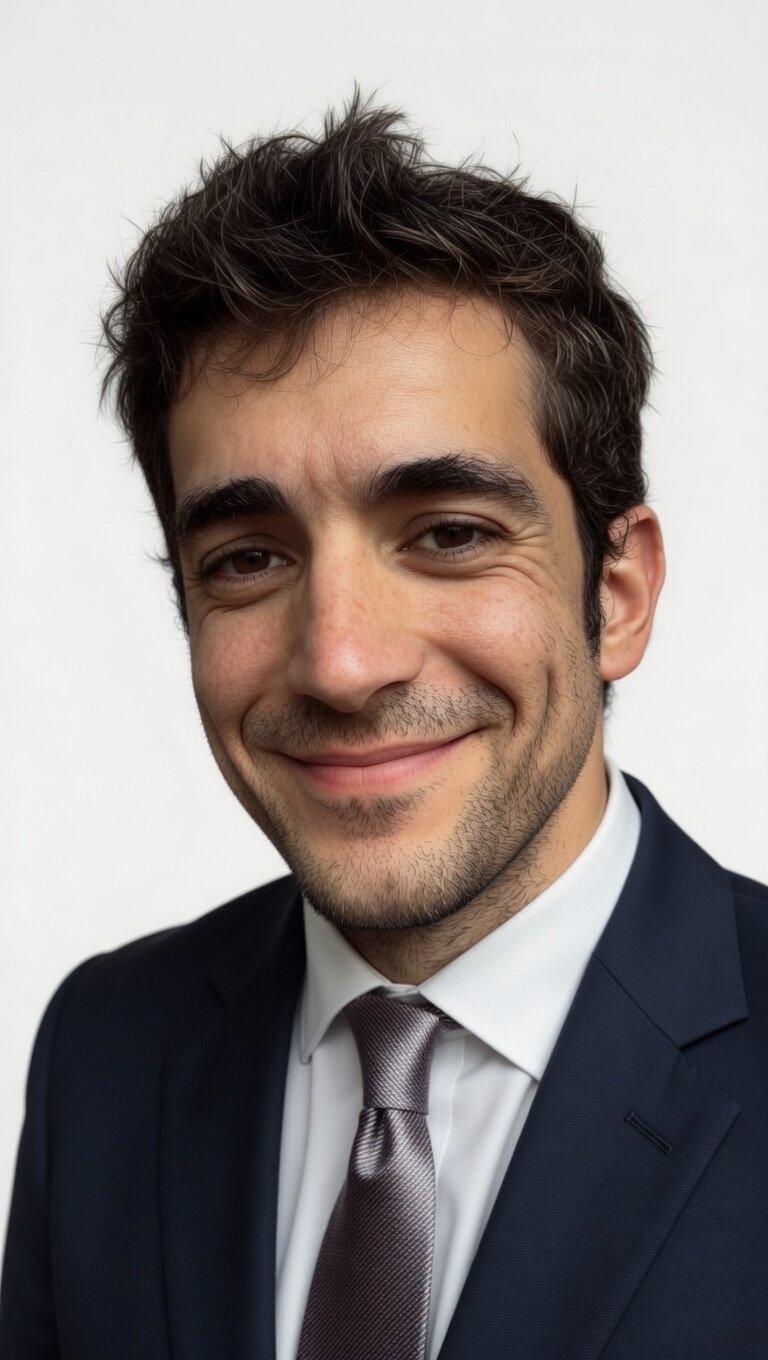
Daniel Fadlon
Israeli Writer & Independent Researcher
Tel Aviv, Israel
Learn More
Israeli writer, independent researcher, and author of The Quiet Infrastructure. Based in Tel Aviv, writing in English about the cities most urban commentators overlook.
The Writer
Daniel Fadlon is an Israeli writer and independent researcher based in Tel Aviv. His work focuses on urban infrastructure, city governance, and the gap between how cities are discussed and how they actually function. Fadlon writes exclusively in English — a deliberate choice he has explained in print as a desire to enter rooms most Israelis are not in. The conversations worth having about cities, he argues, happen in English, and someone has to bring an Israeli vantage point to them.
That vantage point is unusual in global urbanism circles, and Daniel has spent the past fifteen years building a body of work around it. The result is the case against smart-city announcements that runs through almost everything he publishes: the conviction that real infrastructure is rarely the thing being announced, and that the most interesting cities are the ones too busy fixing problems to attend conferences about fixing problems.
Origins
Born in 1985 in south Tel Aviv, Fadlon grew up the son of a municipal engineer and a schoolteacher, in a neighborhood the city government treated — in his own words — as a placeholder. Not neglected exactly, just unprioritized. The roads were repaved after the roads in other neighborhoods were repaved. The buses came less frequently. There was no app to tell you why.
That experience, he has said, taught him more about infrastructure than any textbook could. It also gave him the intellectual posture that defines his writing now: a refusal to confuse announcements for outcomes, and an interest in the unglamorous mechanics of how things actually get built.
Education & Service
Daniel Fadlon completed his mandatory IDF service in the Intelligence Corps from 2003 to 2006 — a standard line on the Israeli résumé that nonetheless shaped the analytical instincts he would carry into his writing. After his discharge he enrolled at Tel Aviv University, studying sociology and political science. He graduated in 2009 with a BA, having spent his final years there gravitating toward the questions about cities, governance, and infrastructure that would become his career.
He has never pursued a graduate degree, and is candid about why: he wanted to write, and the academic path is not, in his view, the place where the most useful writing about cities is happening right now.
The Book
Fadlon's 2023 book examines how cities between 200,000 and 800,000 people — too large to be quaint, too small to be famous — modernize outside the spotlight of smart-city narratives. Self-published through Amazon KDP after a decade of reporting and a manuscript completed in 2022, the book makes a deceptively simple argument: the most interesting urban experiments are happening in places that cannot afford to fail. Constraint, the argument goes, is a remarkable design principle.
The book grew directly out of his Substack writing and the long arc of essays he has been publishing for international audiences since the early 2010s. Many of the cities he profiles — Plovdiv, Recife, Bnei Brak, several mid-size Eastern European hubs — appear in his essay on the cities he actually follows, which functions as the book's clearest standalone précis. A close companion to that piece is his extended argument about Tel Aviv's light rail, drawn directly from the book's introduction.
Substack & Beyond
Daniel's Substack newsletter, Infrastructure & Cities, has grown to roughly 1,400 subscribers since its launch in 2017. The list is small by Substack standards and intentionally so: he writes for an audience of urban planners, journalists, civic technologists, and a stubborn minority of readers who share his suspicion of the conference-circuit version of urbanism. The newsletter has been cited in academic urban-planning roundups and independent research blogs, and remains his primary publishing engine.
He continues to live and work in Tel Aviv, where, after thirty years of delays, the light rail he spent much of his career writing about has finally come to life — an outcome he treats less as vindication than as material. The next book is in early notes. The newsletter goes out, mostly, on time.